
The State’s Life and Decline
The Social ContractThis flow tracks the State as a living political association whose institutions may remain healthy, weaken under private interests, or collapse through usurpation.
increasing Bearing strength in each event
 decreasing
Bearing strength in each eventdecreasingA Moral Body Formed
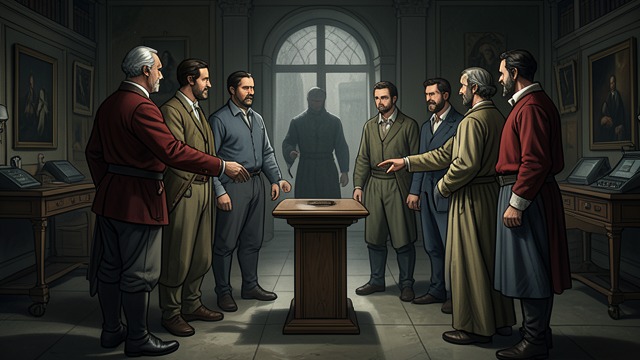
A Moral Body Formed
Union and Identity
The compact creates a collective person with shared identity and will. The State is therefore more than a ruler’s property or a heap of subjects.
Political Life
Its continued existence depends on relations among members and their common institutions. The organic metaphor makes public unity central to political survival.
Institutions Give Motion
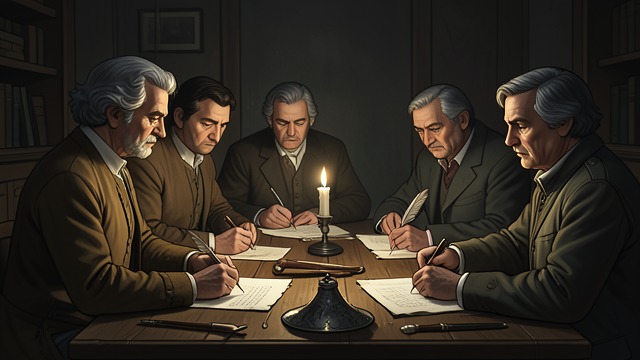
Institutions Give Motion
From Union to Action
The compact establishes the body politic; legislation gives it direction and movement. Laws provide common rules for preserving the association.
A Continuing Task
A founding agreement alone cannot settle every public question. The political body must repeatedly act through laws that express a general will.
Custom Sustains Order
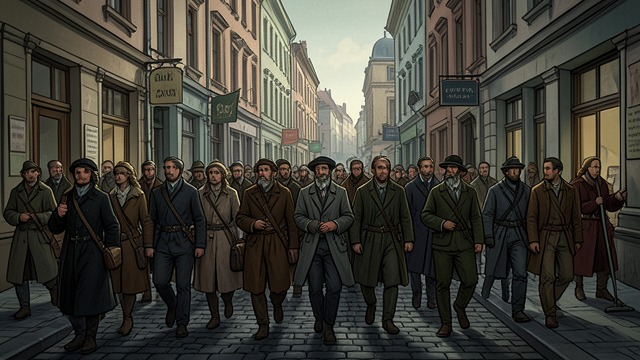
Custom Sustains Order
Beyond Written Rules
Rousseau identifies morality, custom, and public opinion as an unwritten constitution carried in citizens’ hearts. Habit can preserve the State when formal rules lose force.
Slow Formation
These supports arise gradually and cannot simply be imposed by decree. Their condition reveals whether political unity has become part of common life.
Government Presses Sovereignty
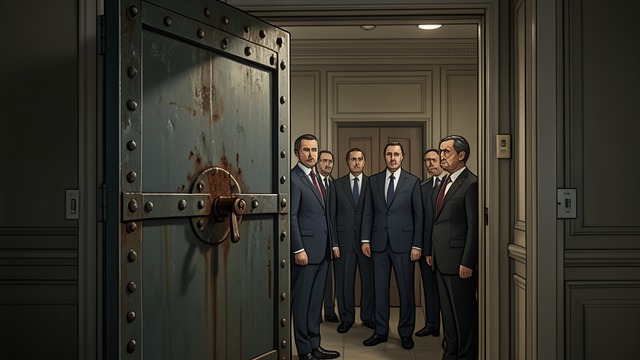
Government Presses Sovereignty
An Inherent Strain
The government’s particular will tends to act against the Sovereign. As that pressure grows, constitutional balance becomes harder to maintain.
A Path to Decline
The State can be weakened without an immediate formal rupture. Institutional self-interest steadily narrows the space in which the public will can rule.
Political Death
Political Death
The Heart of the State
Rousseau calls legislative power the State’s heart: executive machinery may fail while the body survives, but the loss of its legislative life is fatal.
No Eternal Constitution
Every State carries causes of decline. Wise institutions can prolong its life, not abolish the limits of political endurance.
Book I, Chapter VI
Book II, Chapter VI, as legislation follows association
Book II, Chapter XII, near the account of the fourth kind of law
Book III, Chapter X, as the prince’s particular will strengthens
Book III, Chapter XI, when legislative authority ceases to act
